


The way we work is constantly changing, influenced by technological advances, socio-cultural changes and new management approaches. One of the most exciting and promising developments in this area is the introduction of work time reduction in form of a 4-day week. This model aims to reduce working hours without reducing productivity and at the same time increase employee well-being.
 FOLLOW-UP STUDY NOW AVAILABLE
The aim of the follow up report is to track further developments in the participating organizations and assess their status in 2026, roughly two years after the start of the trial in 2024. The focus is on the stability of the models introduced, possible adjustments, alternative forms of working time arrangements, as well as the reasons for and outcomes of transitions back to full time schedules.
- The 2026 Follow Up Report in German can be accessed here: German Follow Up and in English here: English Follow Up.
To this end, we first provide an update on key findings regarding the continued or adapted implementation of the 4DW, before highlighting developments observable over time from both an organizational and an employee perspective, and relating these to the 2024 pilot study.
- The 2024 Pilot Study Report in German can be accessed here: German Pilot Study<-- and in English here: English Pilot Study.
 If you have any questions, feedback or are interested in a cooperation, please contact us via our --> Contactform <--
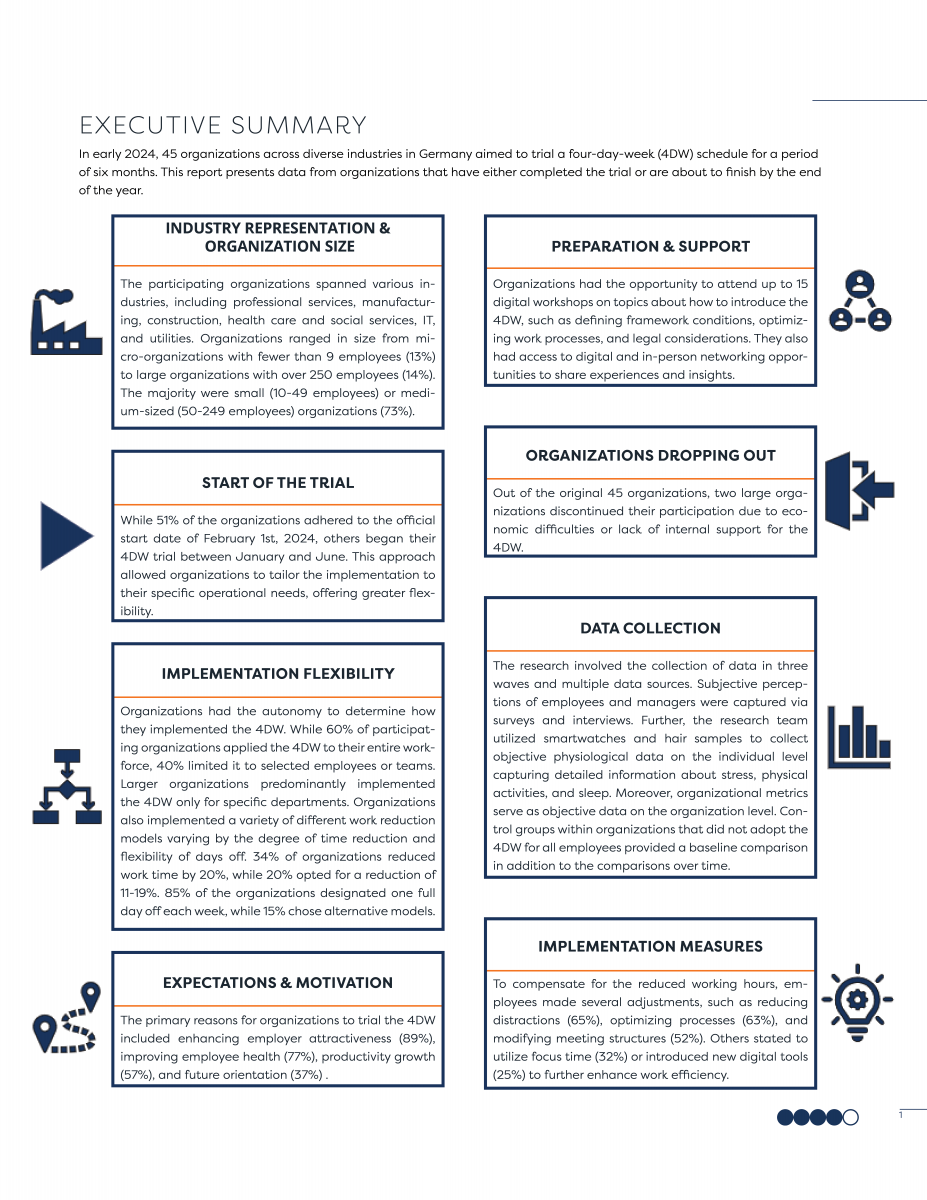
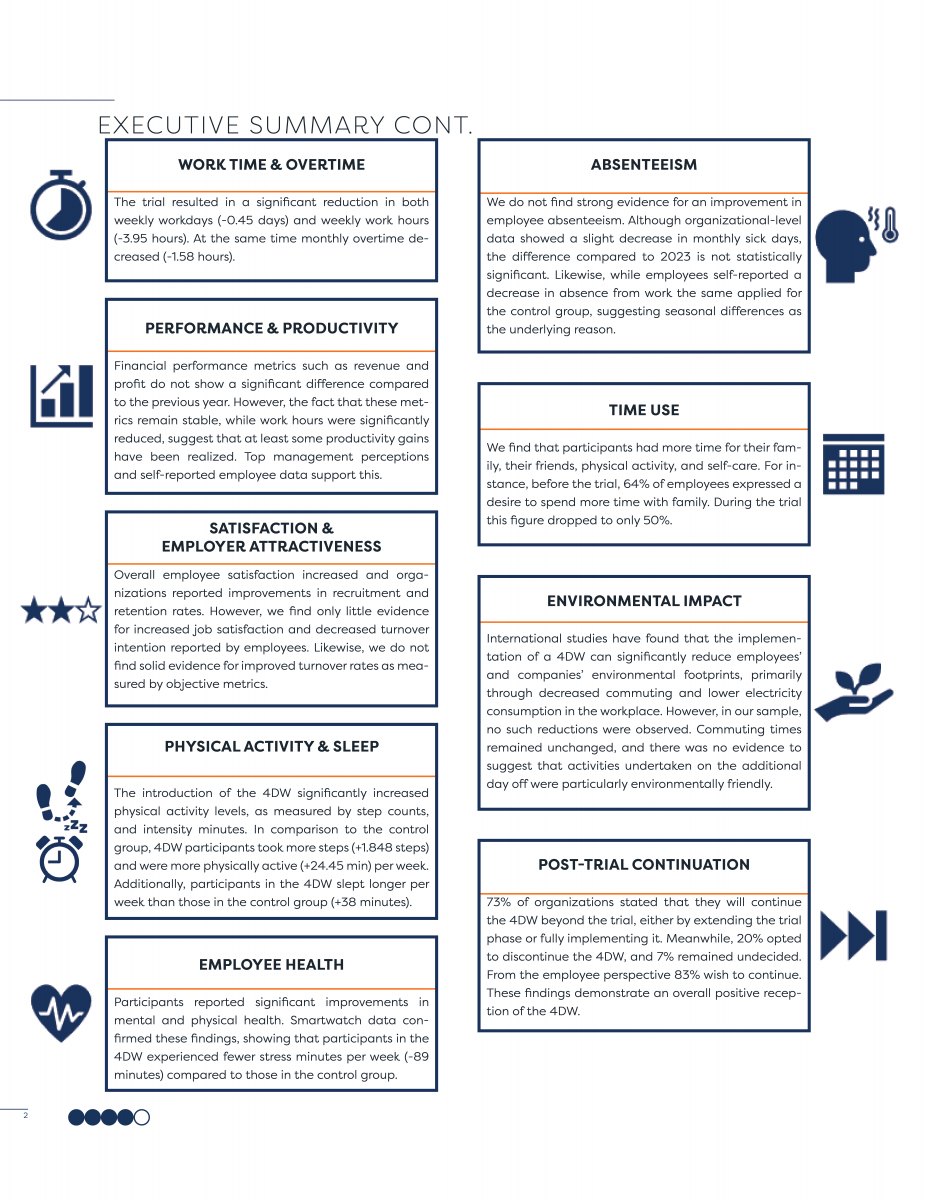
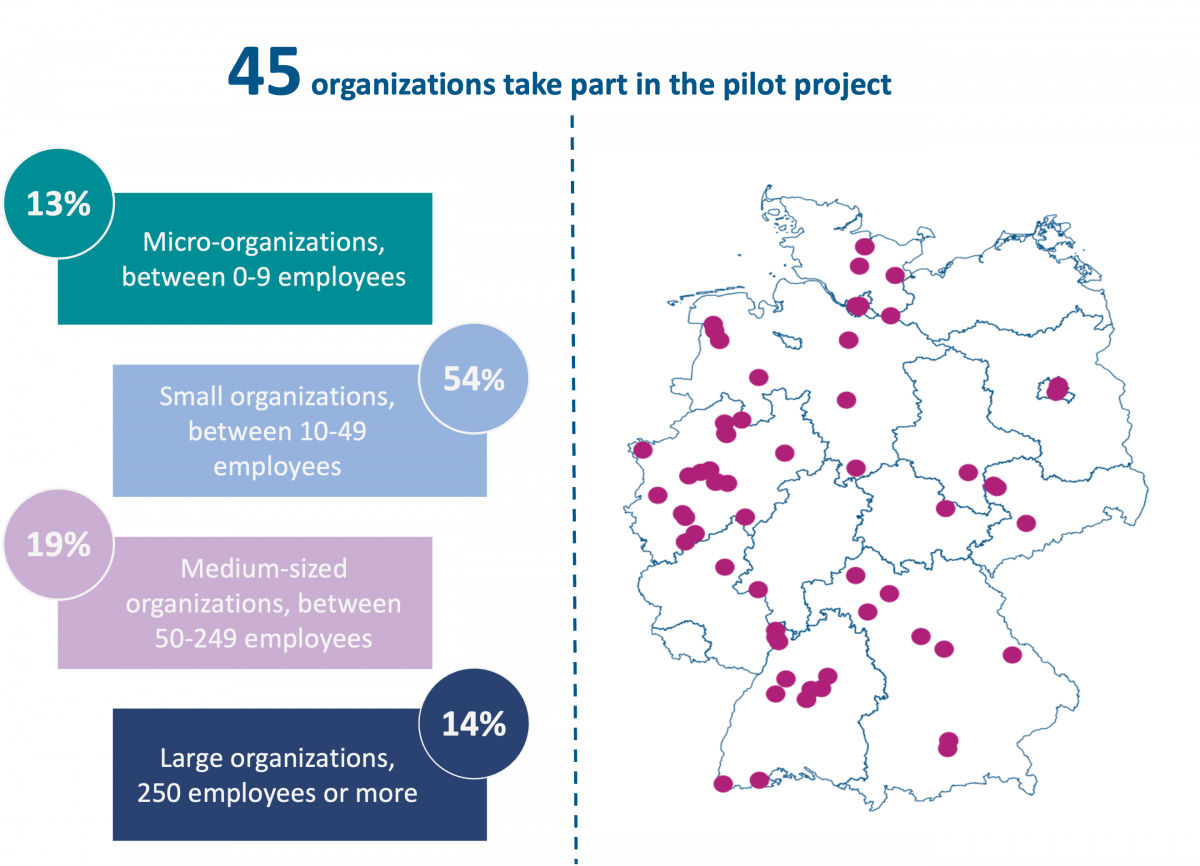
Professor Julia Backmann and her team at the University of Münster are conducting a scientific study on the effects of this working time model. They are focussing on the effects on productivity, satisfaction and the general well-being of employees. Their research could be groundbreaking for companies, governments and other organisations considering changing their employees' working time models. The University of Münster research project utilises a multi-faceted approach to data collection that includes both quantitative and qualitative methods. This methodology enables a detailed picture of the impact of the 4-day week to be developed.


More information on our team here --> Chair <--
1) Tracking data: Interested participants will be given a fitness tracker that will record physiological data such as heart rate, activity levels and sleep quality for the duration of the pilot. This data will help to understand the impact of the 4-day week on employees' physical wellbeing.
2) Hair samples: To investigate the physical impact of the 4-day week, hair samples will be taken to measure cortisol levels as an indicator of stress levels. These samples will be analysed before and after the introduction of the model.
3) Quantitative surveys: Participants will receive personalised links to online surveys that will be conducted at the beginning, middle and end of the pilot project. These surveys will collect data on factors such as wellbeing, stress levels, satisfaction, work performance and energy consumption.
4) Qualitative interviews: In addition to the surveys, interviews will be conducted to gain deeper insights into employees' personal experiences and attitudes towards the 4-day week. These interviews are transcribed anonymously and serve to better understand the subjective perceptions and challenges of the participants.

The data from the first phases of the study so far indicate that the 4-day week not only improves the well-being of employees, but also has a positive impact on productivity. Although the final results are still pending, the findings so far provide valuable information on how the world of work can be made fairer, more efficient and more people-centred.
Companies that choose to participate in the study will not only benefit from the latest research findings, but will also receive a personalised report to help them apply the results in practice and optimise their own working time models.
These media have already reported on the 4-day week pilot project in Germany (link to the respective reports provided)
 |
 |
 |
 |
|
 |
 |
 |
 |
 |
 |
 |
 |
 |
 |
