

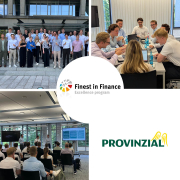
Last Wednesday, we visited Provinzial Konzern in Münster with a large group of dedicated finance students.
Following a presentation about the company, our participants tackled five exciting case studies from Provinzial Asset Management, which provided interesting insights into real-world practice and encouraged discussion.
Company excursion and Case Study with Provinzial
As part of the Finest in Finance Program
Women in Finance 2026
Empowering Women in the World of Finance
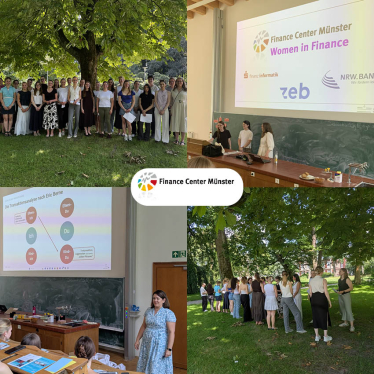
For the third time, our Women in Finance event brought together female students, academia, and industry for an inspiring afternoon filled with valuable conversations, honest insights, and meaningful connections.
The event kicked off with a workshop by coach Brandi Bridges, "Stop Mansplaining: Setting Boundaries and Communicating Effectively," offering students valuable insights and fresh perspectives.
FCM-Summer Seminar 2026
on Ameland, Netherlands

The 2026 FCM Summer Seminar took nearly 25 students and research assistants, alongside Prof. Langer and Prof. Schneider, to the idyllic island of Ameland in the Netherlands for one week. Surrounded by the North Sea and dune beaches, everyone enjoyed a great time in Ballum.
Students and staff had the opportunity to participate in several joint activities. Among other things, they played bubble football, visited a climbing park, went kayaking, and competed in paintball. The final evening concluded with a mudflat hiking tour together.
Case Study with Capcora
As part of the Finest in Finance Program
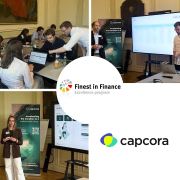
We were pleased to welcome Capcora to a Finest in Finance event at the University of Münster.
Represented by Henning Prigge, Tea Kalan and Yannick Erdmann, the team provided our students with valuable insights into energy transition M&A and debt advisory. Through an interactive case study and an engaging discussion of the results, participants gained practical exposure to real-world challenges and opportunities in the finance sector.
Foundations of Utility and Risk Conference
in Alicante, Spain

In June, our colleagues Thomas Langer, Edona Selimaj, and Jonas Backhus attended the "Foundations of Utility and Risk Conference" (FUR) in Alicante, Spain. The program featured presentations, keynotes, and intensive discussions on current topics in the fields of decision theory and behavioral/experimental economics/psychology.
European Conference of the Financial Management Association 2026
in Braga, Portugal

From June 10-12, our colleagues Leonie Wieneke, Constantin Schneider, Christoph Domnick, and Jan Harren presented their research at the 2026 European Conference of the Financial Management Association in Braga, Portugal.
The conference provided an excellent opportunity to discuss current developments in finance research, receive valuable feedback on ongoing projects, and exchange ideas with scholars from around the world.
3rd EER Summer School in Experimental and Behavioural Economics
in Lisbon, Portugal
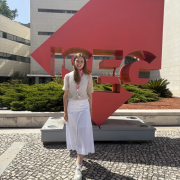
At the beginning of June, our colleague Theresa Hilp took part in the 3rd EER Summer School in Experimental and Behavioural Economics in Lisbon, Portugal. The program featured lectures, panel discussions, and workshops on topics such as strategic thinking in behavioural game theory and the predictive power of social preferences. Among the speakers were Vincent Crawford, Ernst Fehr, and Isabelle Brocas.
Case Study with RSM Ebner Stolz
As part of the Finest in Finance Program
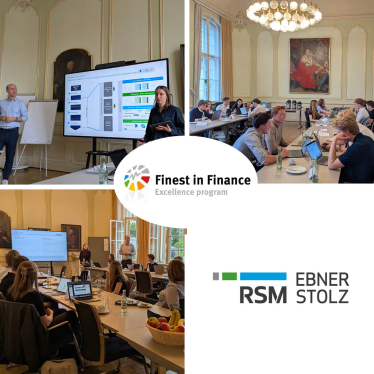
On June 2, members of the University of Münster’s Finest in Finance Program had the opportunity to participate in an exciting M&A case study with two management consultants from RSM Ebner Stolz.
Ludwig Mülhaupt-Prize 2025/26
Felix Attermeier
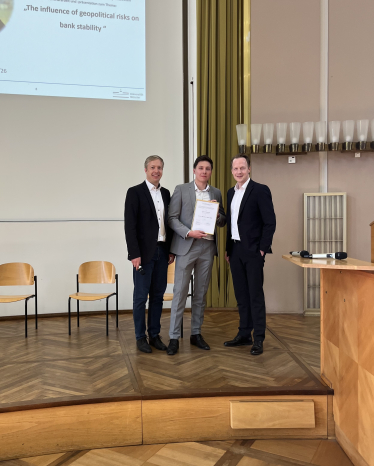
As part of the FCM Semester Lectures 2026, Felix Attermeier was awarded the 2025/26 Ludwig Mülhaupt Prize. The award recognised his outstanding achievements in the module “Financial Intermediation I” and his seminar paper on the topic “The influence of geopolitical risks on bank stability”. The paper examines the impact of geopolitical risks on the stability of European banks, thereby addressing a highly relevant issue at the intersection of finance, banking and geopolitical uncertainty.
Congratulations on this special award!
- ‹ previous
- 3 of 37
- next ›